
Services · Food and FMCG branding
FMCG and food product branding in Dubai.
Food brands make up most of our portfolio, and many of them sit on a shelf rather than behind a restaurant counter. Abcon Branding builds brands for food producers, foodstuff traders and consumer goods companies in the UAE, with work covering rice, flour, pulses, tea, chocolate, spreads, protein bars and household care. We design the identity, the pack family that carries it and the material around it, from catalogues to delivery vans, so a buyer, a shelf and a shopper all meet the same brand.
- 1997Abcon Group began
- 300+People across Abcon Group
- UAE & OmanWhere the group works
What FMCG and food product branding covers
A product brand is judged at three distances: across a supermarket aisle, in a shopper’s hand and on a buyer’s desk. We plan for all three. Most projects draw on some of these:
- Brand and range strategy
- who the product is for, how it should compare with the brands beside it on the shelf, and how the range is organised by flavour, size or use before any pack is drawn.
- Product naming and descriptors
- a brand name, product names and the short descriptors that tell a shopper what is inside, checked for how they sound and read in English and Arabic.
- Bilingual identity
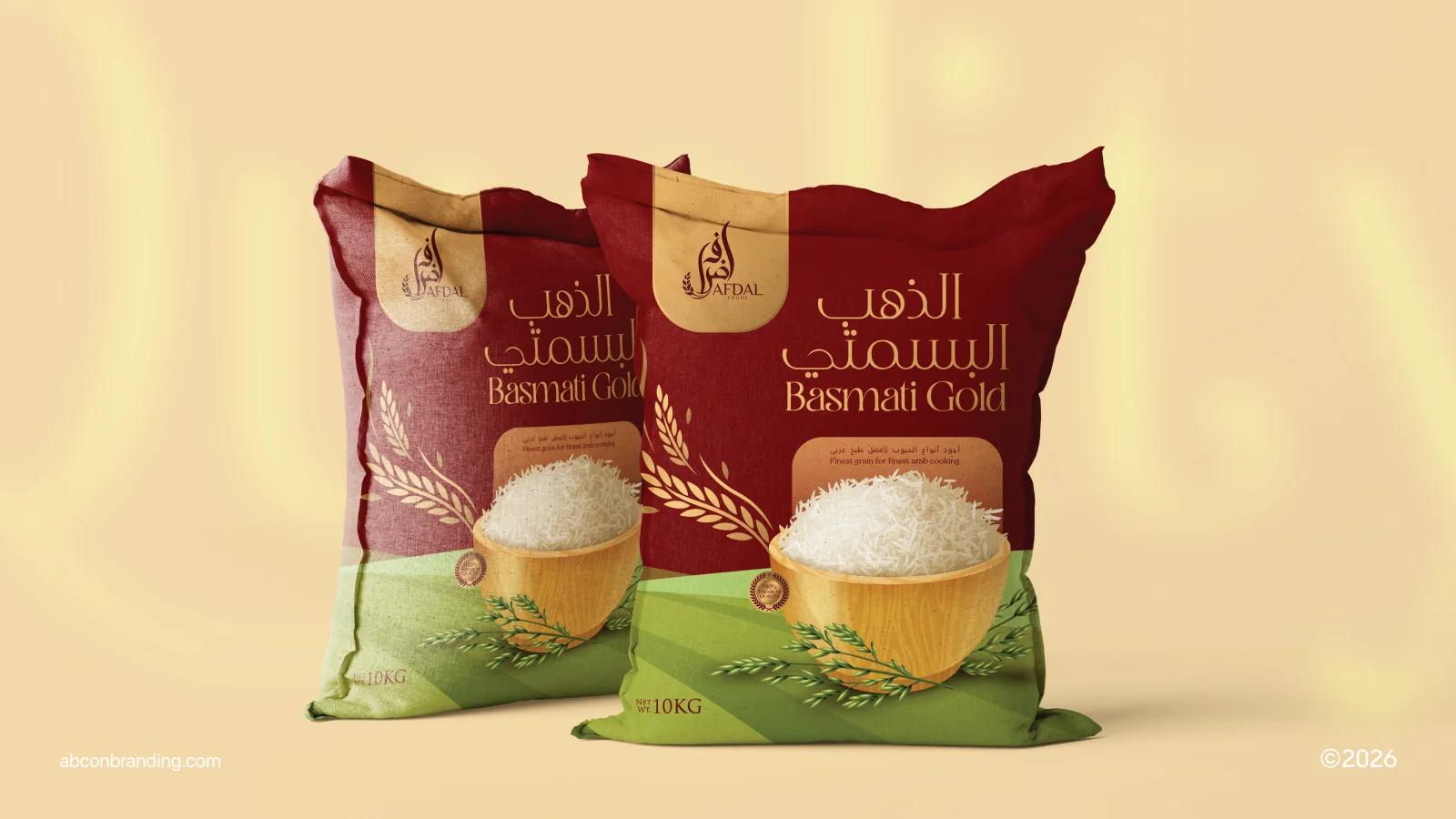
- a logo designed in Arabic and English together, as for Afdal Foods and Jumanah Foods, so both scripts read as one brand on a pack, a carton and a shop front.
- Pack architecture
- the fixed rules for every pack: where the brand sits, where the product name sits, what changes from one variant to the next and what never moves.
- Range and variant systems
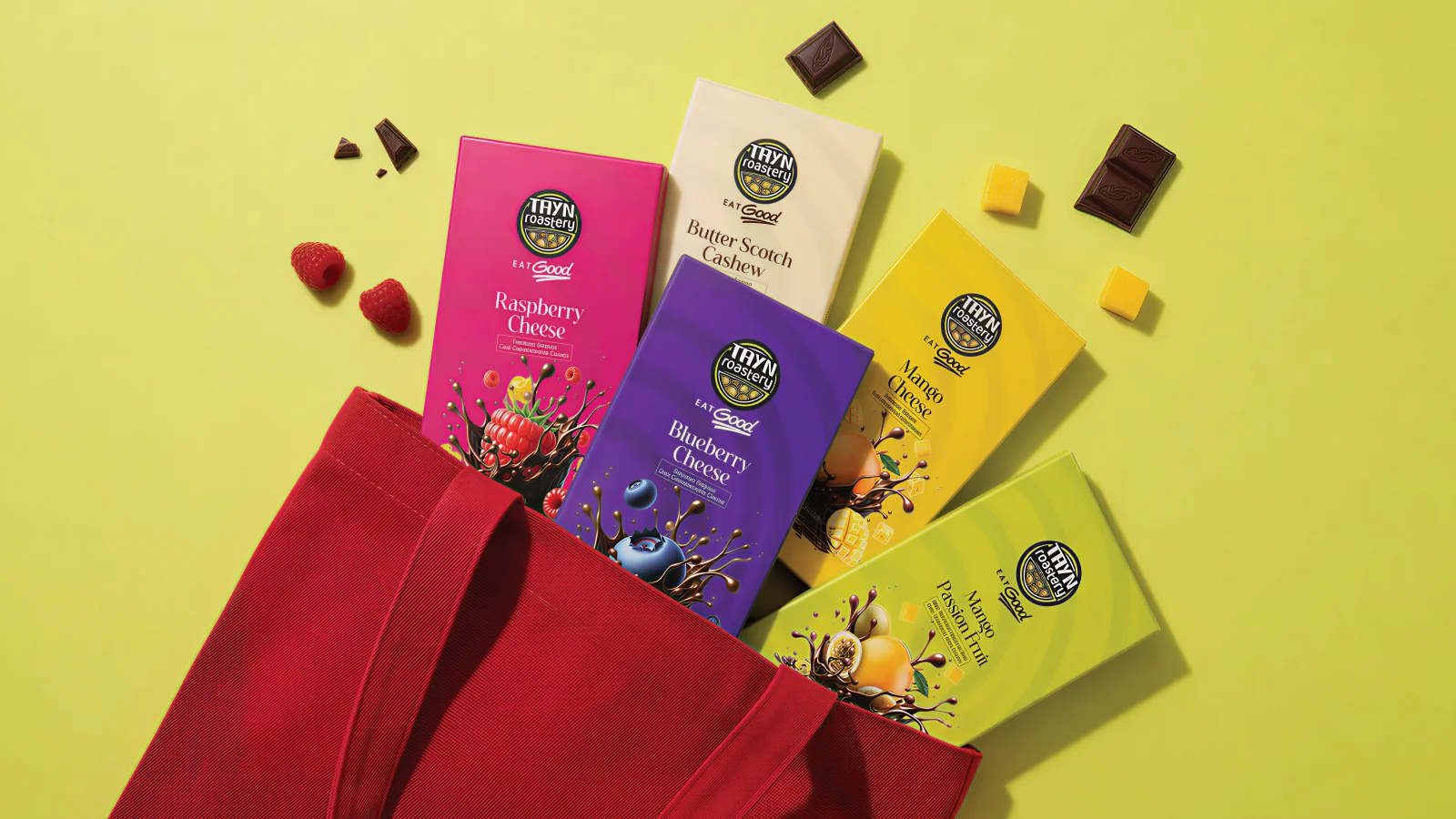
- colour, photography and ingredient cues that separate flavours and sizes without breaking the family, as in Tayn Roastery’s chocolate wrappers.
- Packaging artwork for every format
- pouches, bags, jars, wrappers, cartons, display boxes and outer cases, prepared against the printer’s or converter’s specifications.
- Label information layout
- space and hierarchy for ingredients, nutrition, barcodes and the other details a label has to carry. You supply and approve the content; we make it clear and legible.
- Trade and sales material
- product catalogues, sell sheets and company profiles that present the range to distributors and store buyers, like the Trusbrands product catalogue.
- Campaign and launch creative
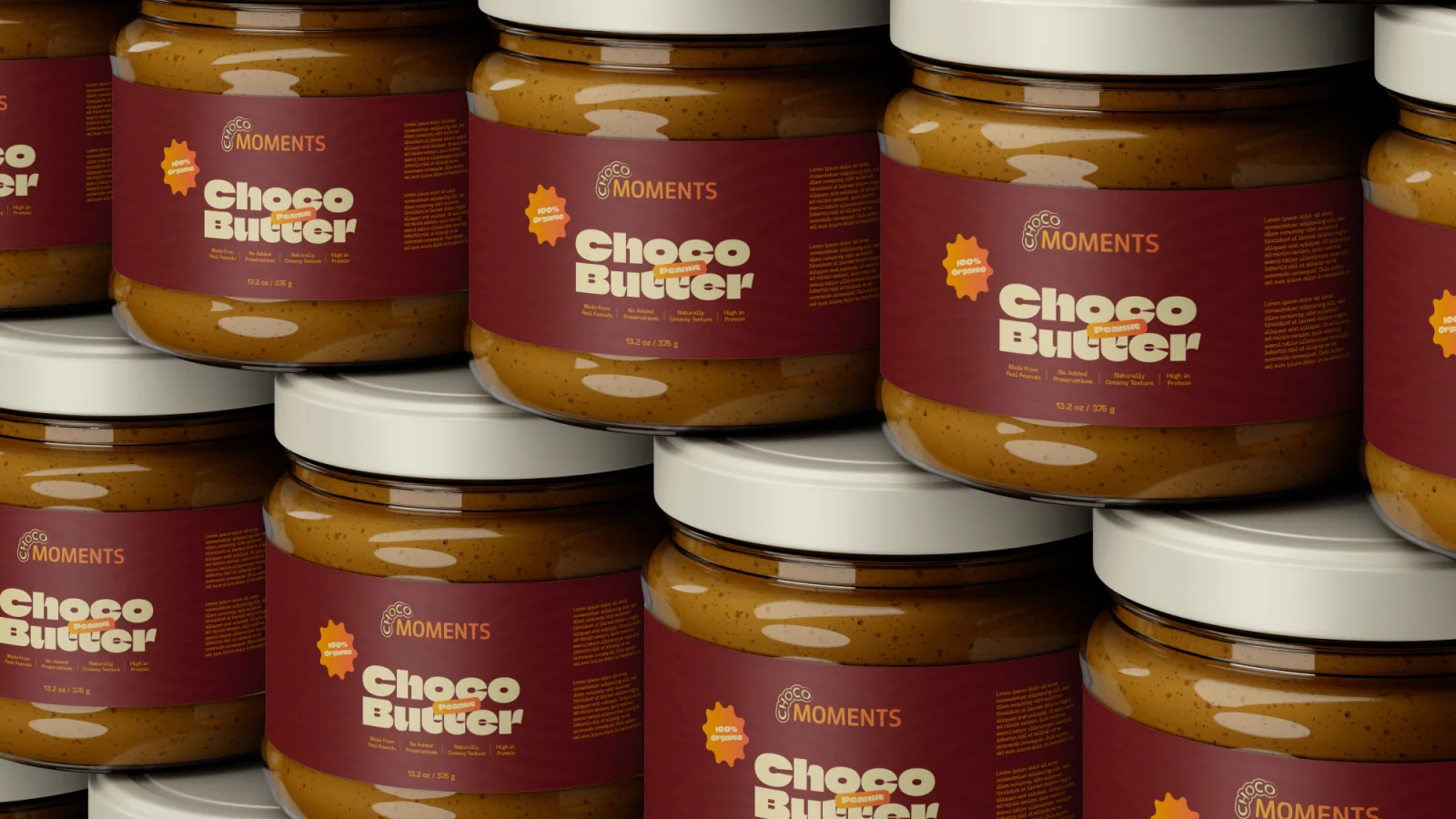
- product photography, social posts and advertising built from the pack design, as in the Choco Moments campaign artwork.
- Delivery vehicles and uniforms
- van and truck livery, staff uniforms and merchandise for brands that deliver their own products to stores and kitchens.
What a food or consumer product brand has to do
Be found on a crowded shelf.
Shoppers scan an aisle quickly. Colour, shape and the position of the brand on the pack do most of the work before anyone reads a word.
Make variants easy to tell apart.
If two flavours or two sizes look alike from a metre away, the shopper has to stop and read. A clear variant system lets them pick the right one without searching.
Read in Arabic as well as English.
Many shoppers in the UAE read the Arabic first. When the Arabic is typed under the English as an afterthought, the pack looks like a translation rather than a brand.
Hold together as the range grows.
A new flavour, size or product line should join an existing system. Without one, every launch starts a new design and the shelf slowly fills with packs that do not look related.
Persuade the buyer before the shopper.
Distributors and store buyers see the catalogue, the samples and often the delivery van before a single pack reaches the shelf, so those need the same care as the pack.
Survive production.
Artwork has to work on the actual film, paper or carton, within the printer’s colour limits and on the cutter guide the converter supplies. A design that only works on screen is not finished.
How we work on food and FMCG branding
Every project follows the same four stages. This is what they mean here:
- 01
Diagnose
We look at the product, the price point, the channels it is sold through and the shelf it will share, including the brands it sits beside. We review any existing packs, the printer’s or converter’s specifications and what you plan to add to the range next, so the system is designed for the range you are building, not only the products you have today.
- 02
Architect
We set the brand, the pack architecture and the variant rules, then design the key packs and review them together as a family. Where the brand needs two languages, the Arabic and English are developed side by side. We show the packs in context, on a shelf and in the hand, before final artwork begins.
- 03
Deploy
We prepare production artwork for every product, size and outer case, along with the files for catalogues, vehicles, uniforms and launch creative. Abcon Group includes Alfapack Plastic & Paper Packaging, GPack Paper Packaging and German Printing Press, so packaging and print can be produced within the group, or we prepare artwork to your existing supplier’s specifications.
- 04
Compound
When a new flavour, size or product line arrives, it follows the rules already in place. We extend the system, update the guidelines and keep the packs, the trade material and the campaigns consistent as the brand and its distribution grow.
Read more about our process.
Food and consumer product brands in our portfolio
These come from original project presentations in our portfolio: rice and flour, pulses and tea, chocolate, a spread, protein bars, foodstuff trading, household care and food distribution. The pack and vehicle images are design mockups from those presentations. They show the design system, not shelf performance or sales results.
- Tayn Roastery: a chocolate range where each flavour has its own colour and ingredient cue inside one wrapper structure.
- Afdal Foods: a bilingual rice brand carried across a family of gold, burgundy and green packs.
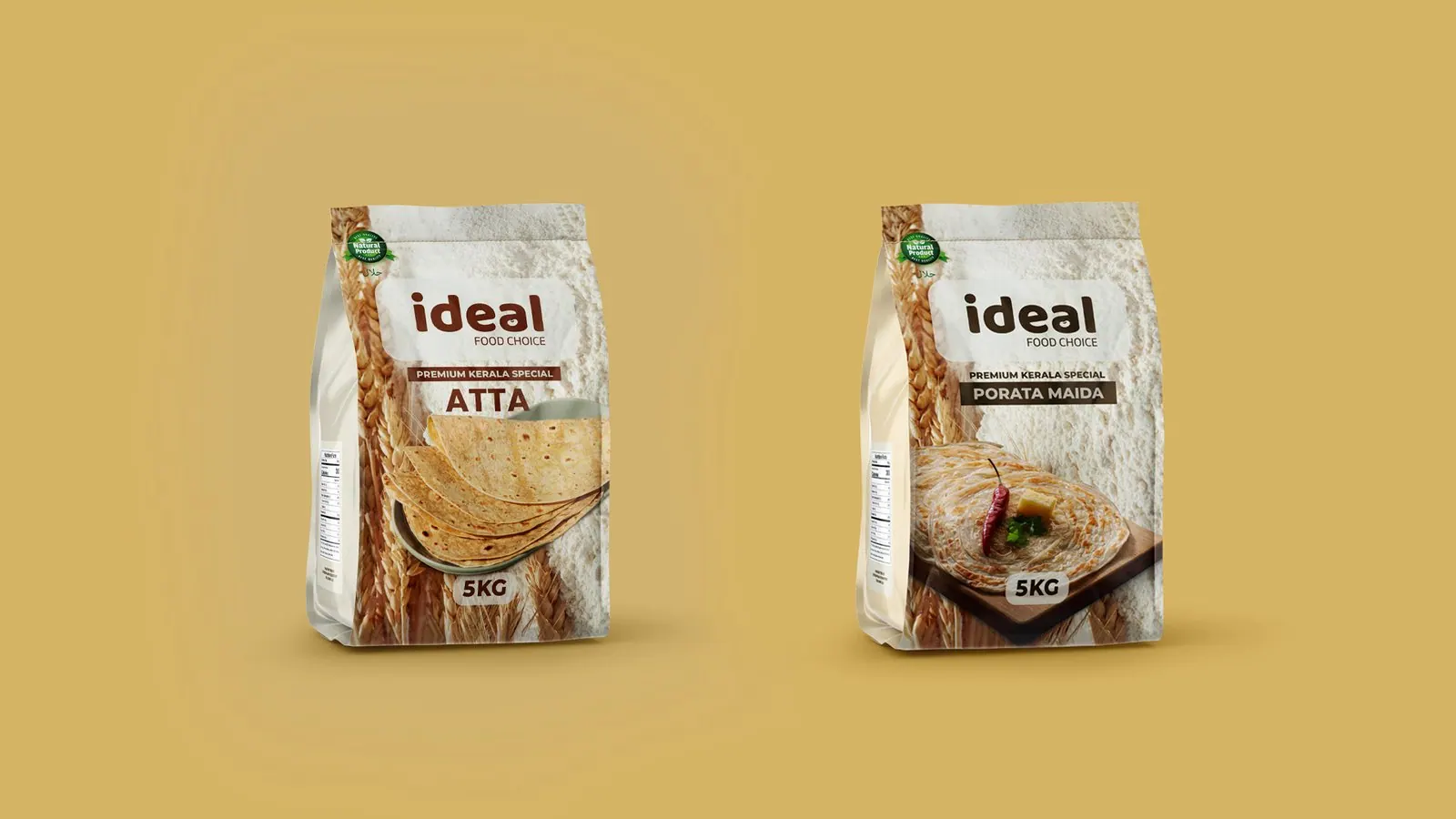
- Ideal Food Choice: 5 kg atta and porata maida packs that change product photography but keep the green logo panel.
- Choco Moments: a chocolate-spread jar label repeated across a shelf composition.
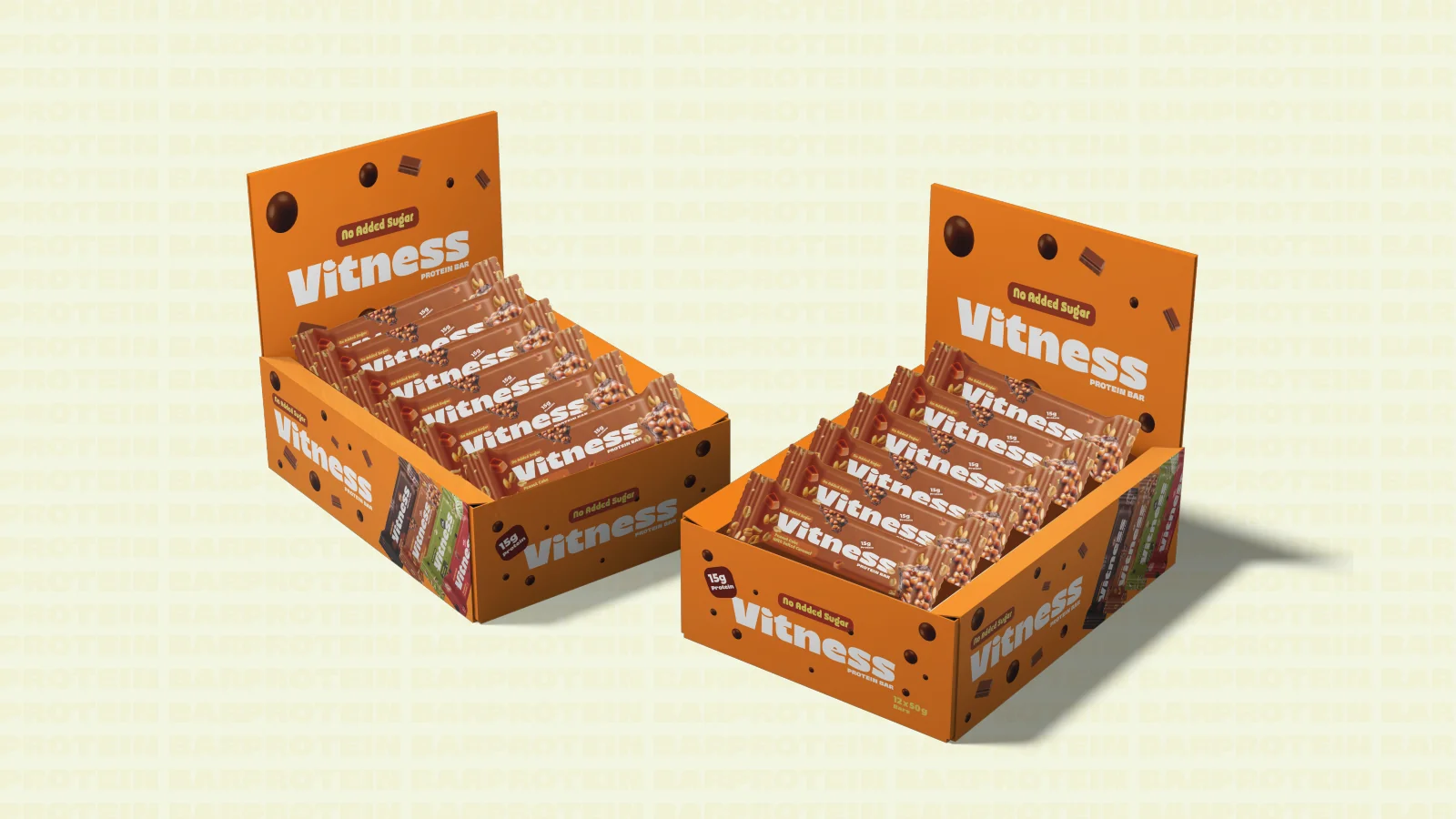
- Vitness: protein-bar wrappers in flavour colours, grouped in retail display boxes.
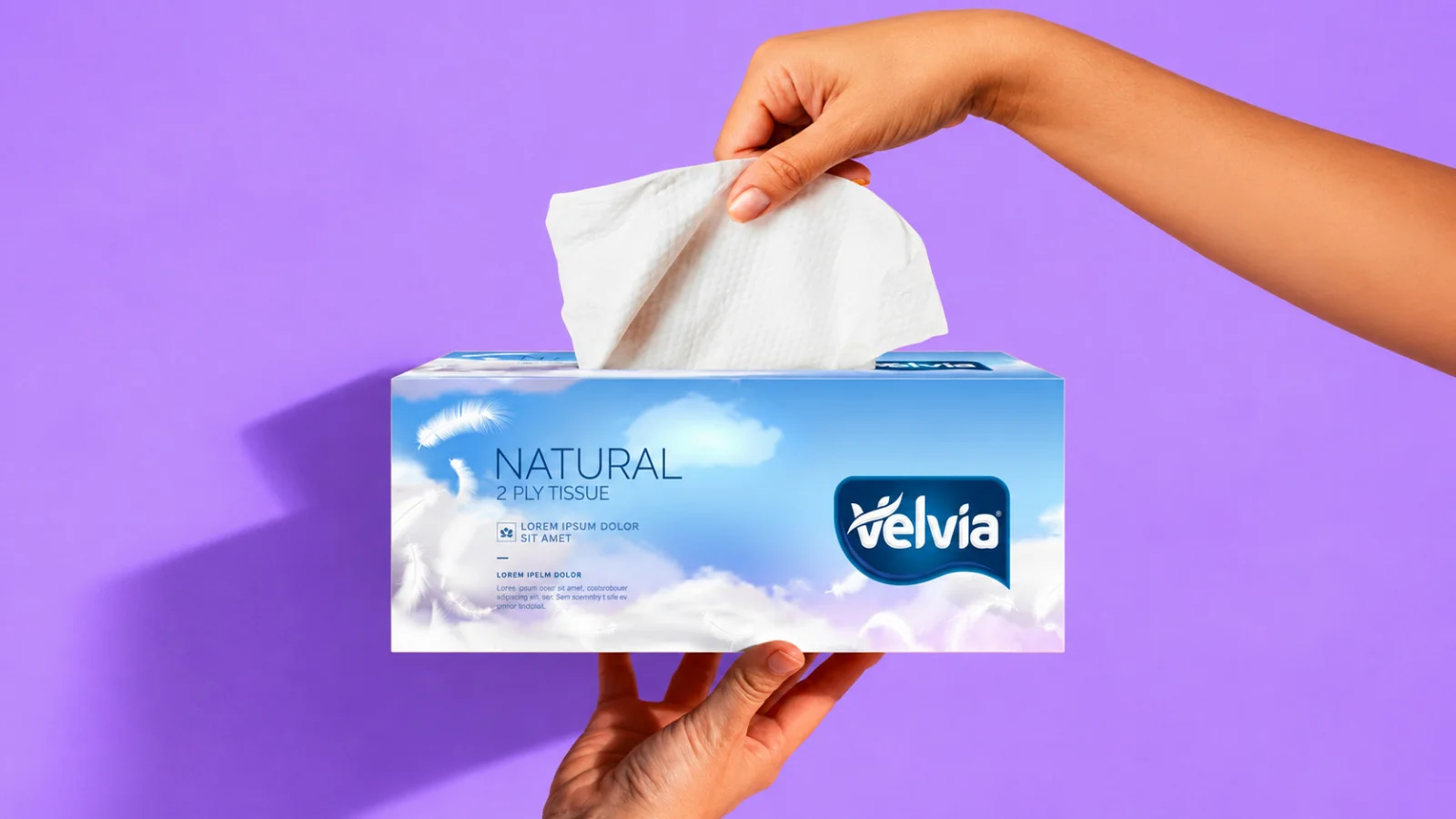
- Velvia: a household-care identity carried from handwash to tissue cartons and soap.
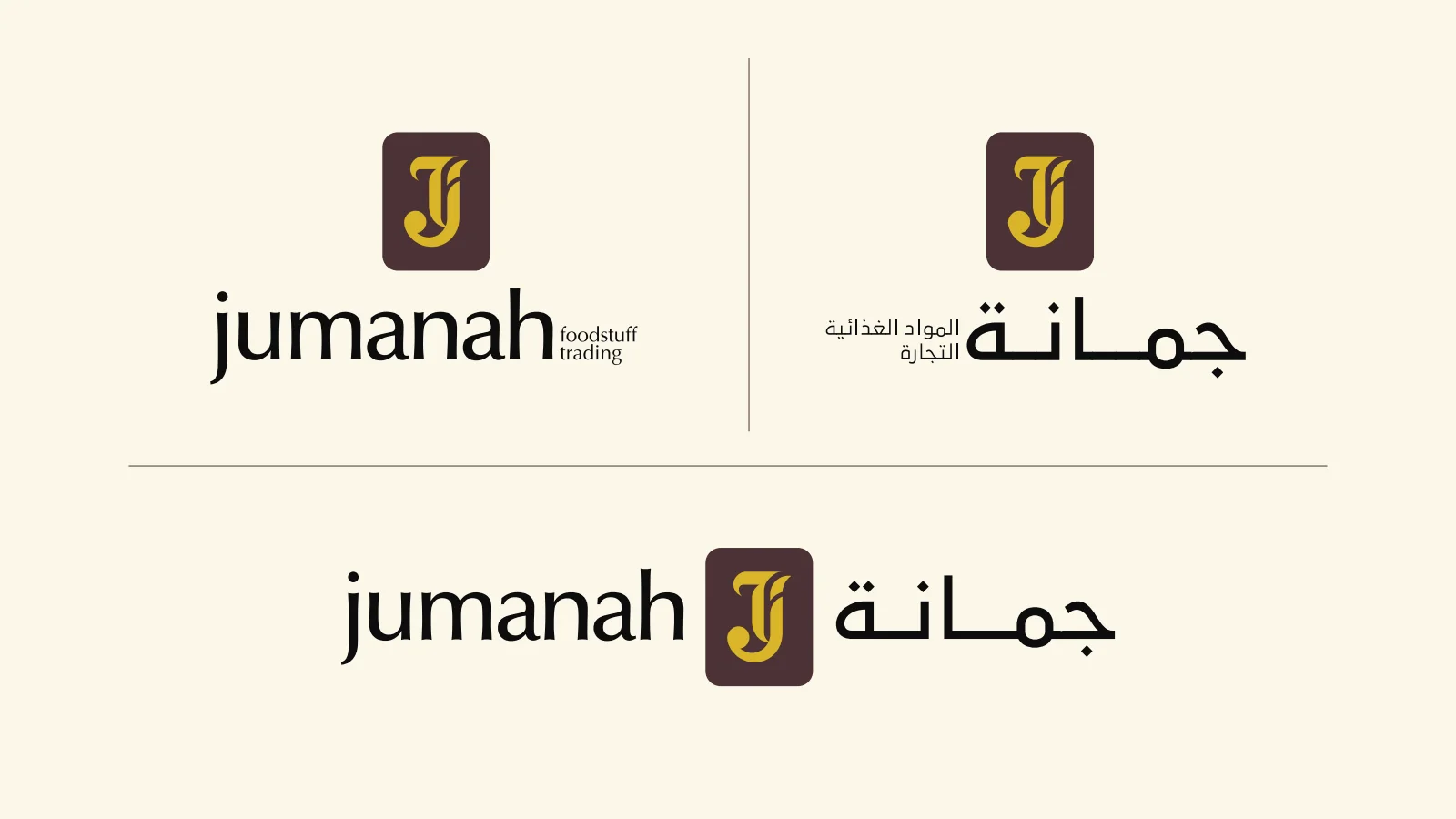
- Jumanah Foods: English, Arabic and combined lockups built on one J and Jeem monogram for a foodstuff trader.
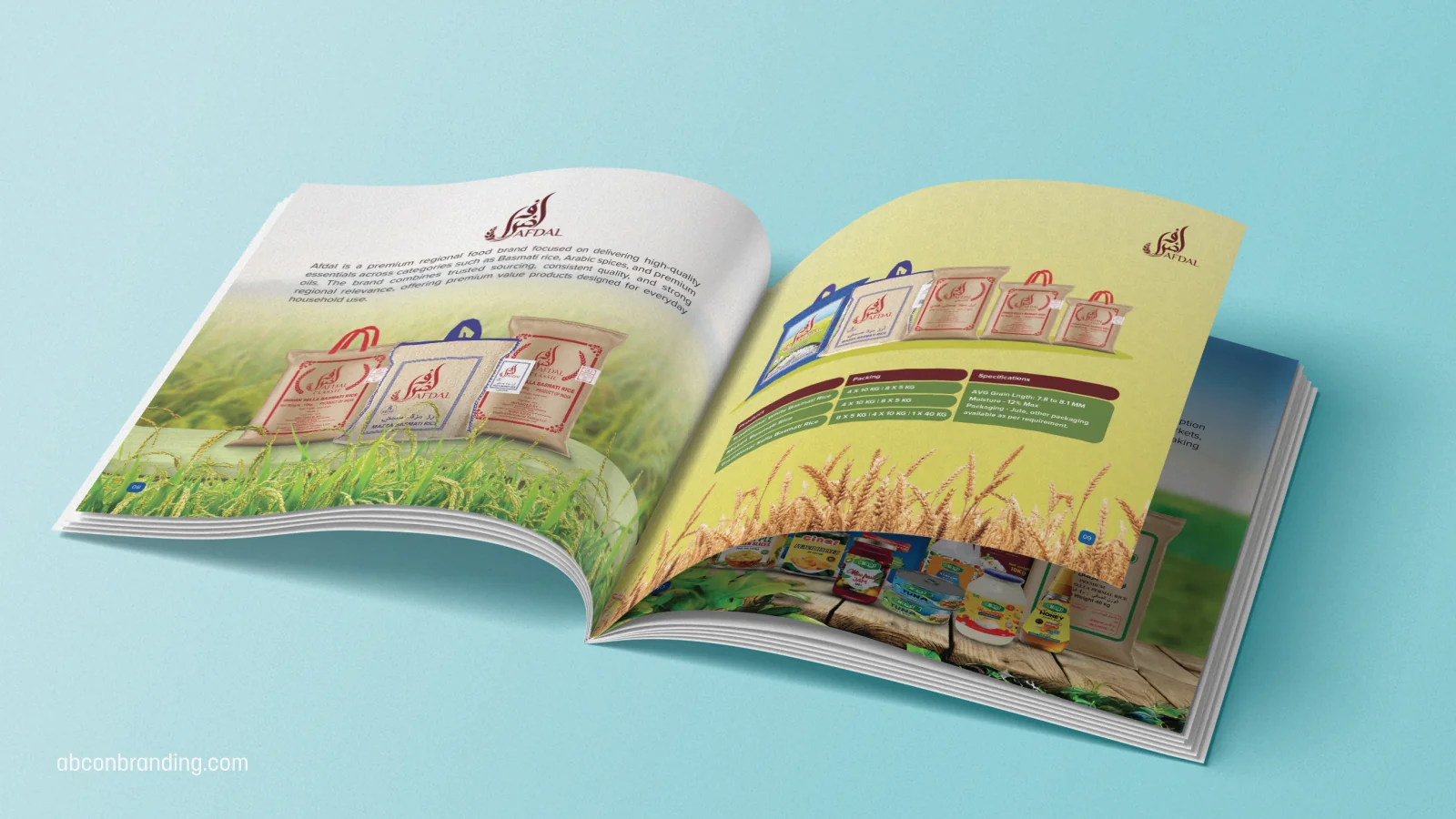
- Trusbrands: a product catalogue that gives each brand in the range, including Afdal, its own spread.
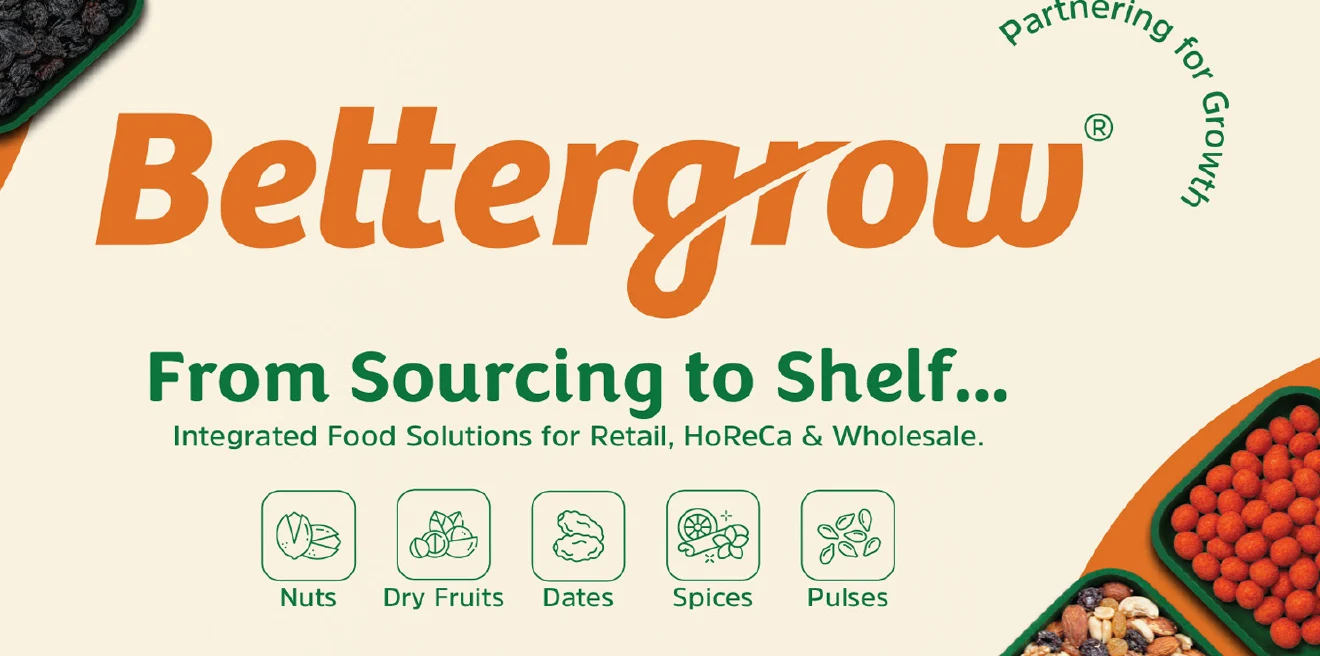
- Bettergrow: “From Sourcing to Shelf” and five category icons on the side of a food-supply truck.
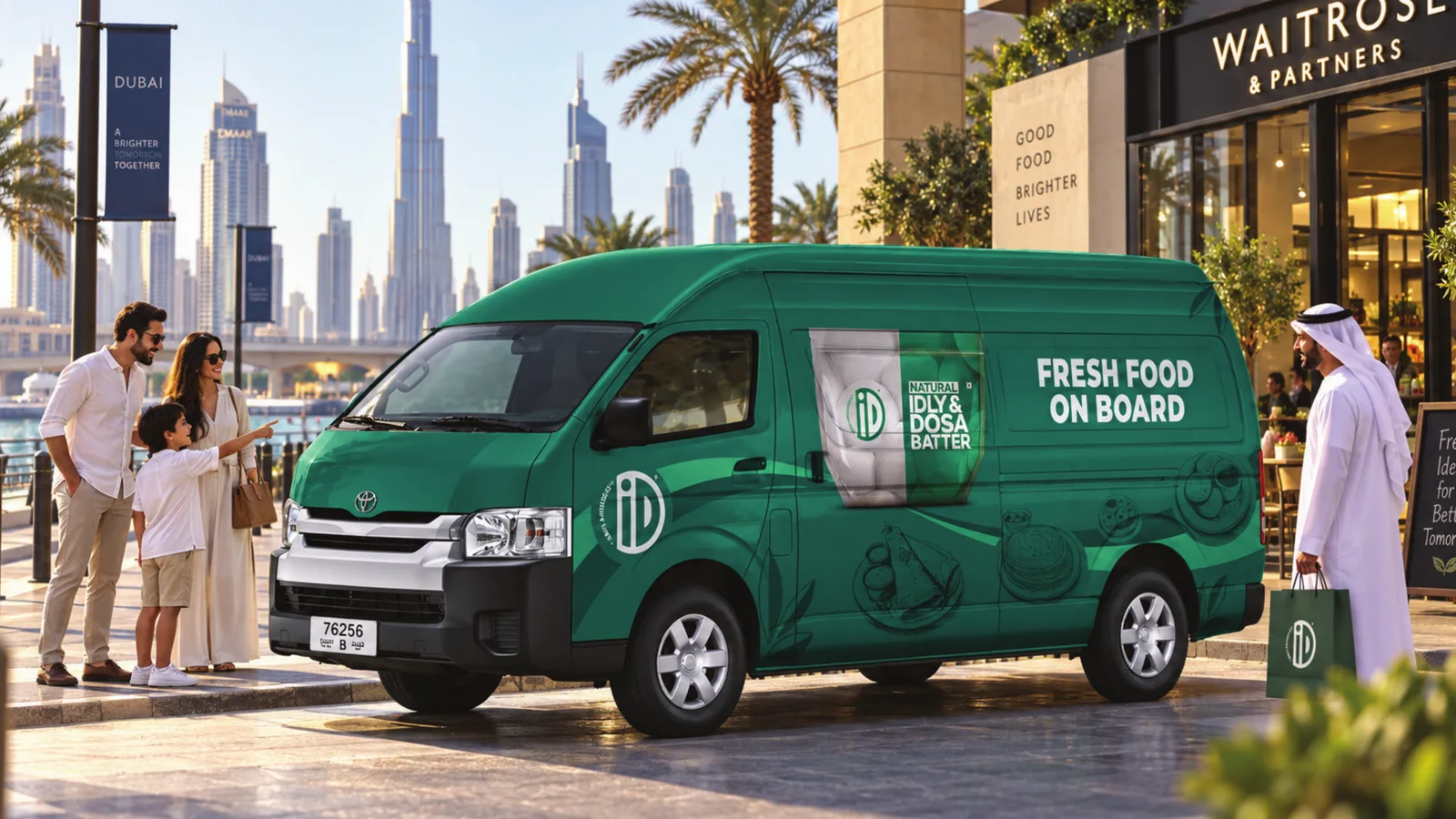
- iD Fresh Food: a delivery van that carries its batter pack on the side, shown outside a supermarket.
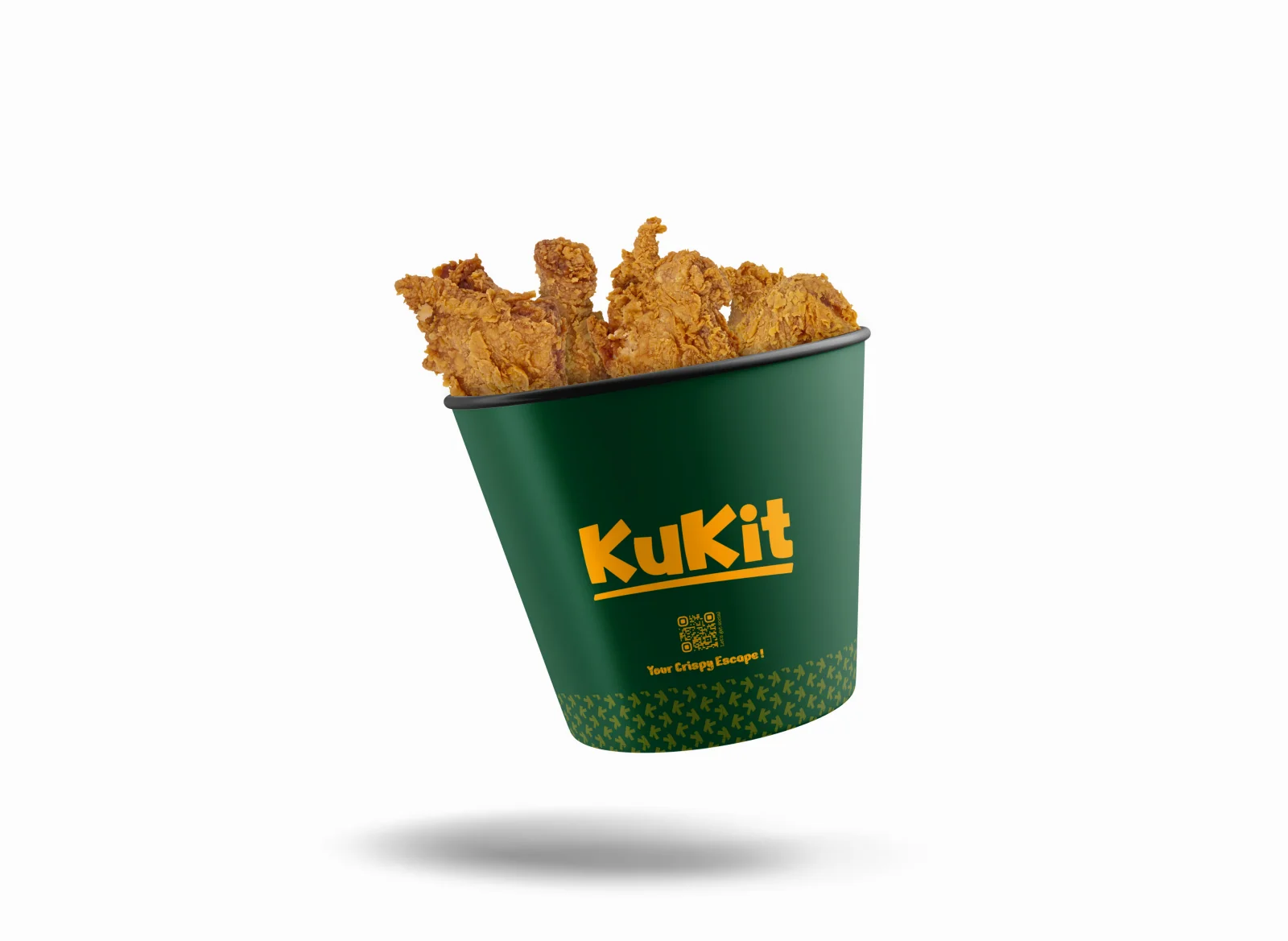
- Kukit Packaging, for an Abcon Group venture: one identity carried from fries sleeves and chicken buckets to drink cups.
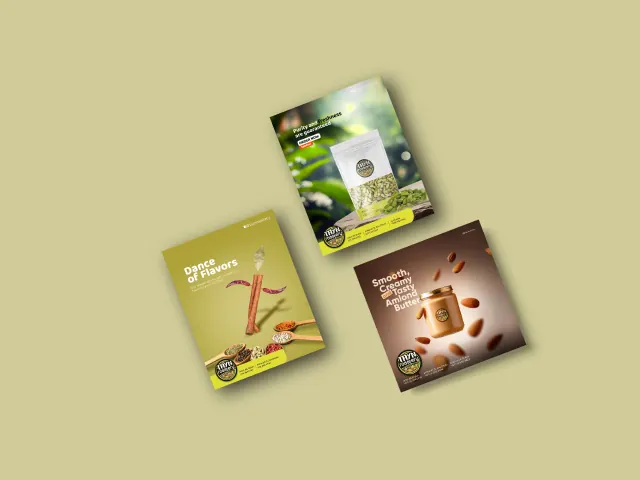
- Food-product advertising built around a retail pouch and a jar.
Decisions behind the work
See how an idea carries into the design. These examples draw on the original project presentations.
How do several flavours stay one product family?
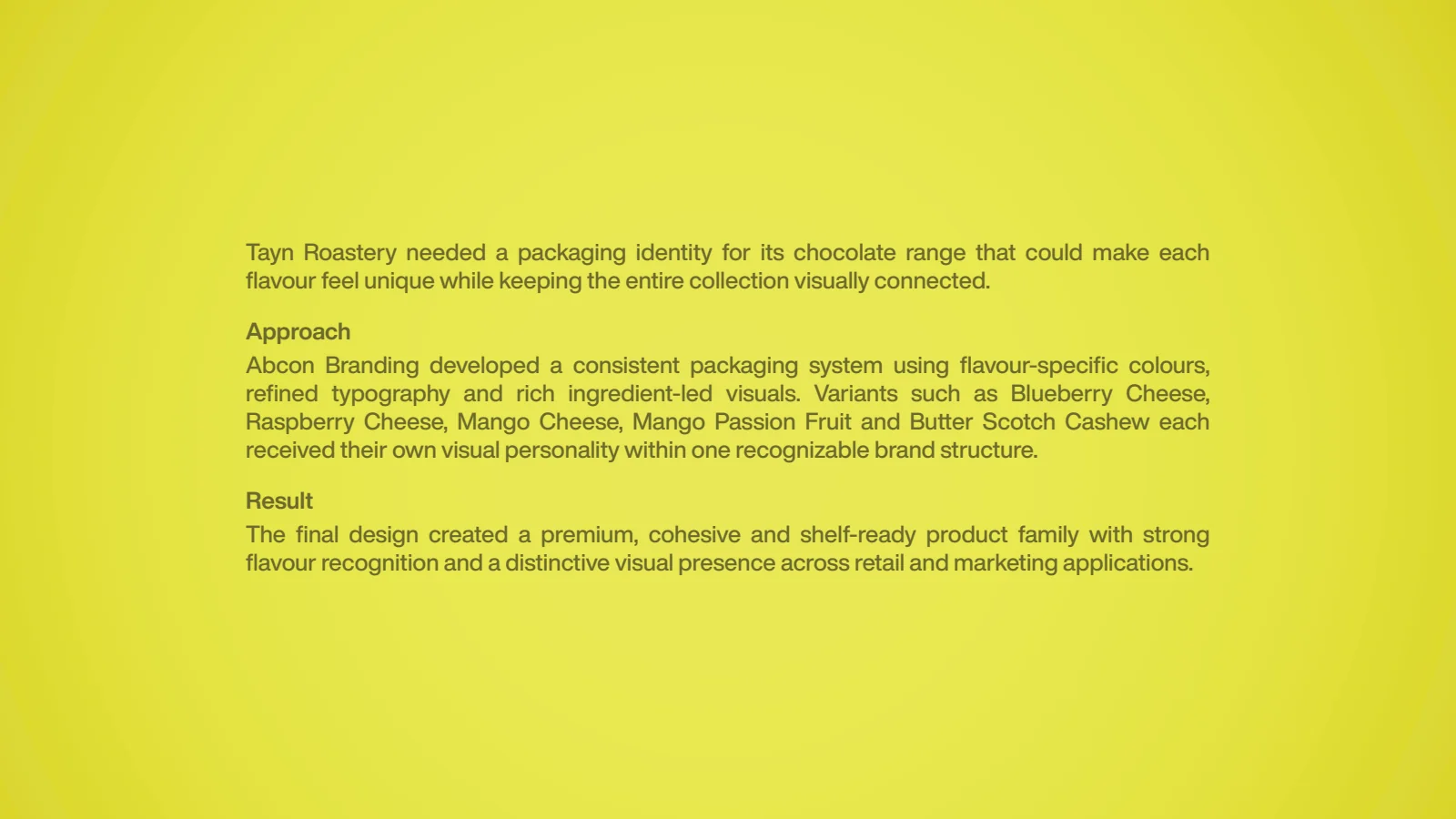
Tayn Roastery’s original brief asks for each chocolate flavour to feel distinct while the collection stays connected.
The wrappers change background colour and ingredient imagery by flavour, but keep the same logo position, product hierarchy and chocolate imagery treatment.
Read the Tayn Roastery case studyHow does the brand stay visible when every pack shows a different product?
Ideal’s 5 kg atta and porata maida packs each carry their own product photography.
The green logo panel stays in place while the background colour and imagery change by product, so the brand is recognised first and the product second.
Read the Ideal case studyWhat shapes the cost of FMCG and food product branding
We quote every project after a first conversation, so the proposal matches what the business needs. These are the things that move the cost and the timeline most:
- Brand or packs: a new brand with naming, identity and packaging is a larger job than new packs inside an identity you already have.
- Products and variants: every flavour, size and format adds artwork, so a range of twenty products is a different job from a single hero product.
- New structures: a custom carton, display box or pouch shape needs structural work and samples, while standard formats use the converter’s existing cutter guides.
- Languages and label content: bilingual packs need design time for both scripts, and the amount of required label text affects every layout.
- Photography: product, ingredient and lifestyle shoots for packs and campaigns are planned and quoted separately from design.
- Trade and launch material: catalogues, sell sheets, vehicles, uniforms and campaign creative each add scope beyond the packs.
- Production: materials, finishes, print runs and minimum order quantities set the production budget, which is separate from the design fee.
Our guide to what branding costs in Dubai explains how to compare quotes.
Questions and answers
Do you design supermarket products as well as restaurant brands?
Yes. Alongside our restaurant work, the portfolio includes retail packs for Afdal Foods rice, Ideal Food Choice flour, pulses and tea, Tayn Roastery chocolate, Choco Moments spread, Vitness protein bars and Velvia household care. Each started with the brand and then moved to the pack family.
Can you design our product brand in Arabic and English?
Yes. We design both scripts together so they share weight, proportion and character. Afdal Foods leads with an expressive Arabic form above the English name, and Jumanah Foods joins the Latin J and the Arabic Jeem in a single monogram. Their original presentations show both on packs, stationery and a shop front.
How do you keep a large range consistent as we add products?
We set a pack architecture early. The brand, the product name, the variant cue and the information panel each have a fixed place, and new products follow those rules. Tayn Roastery’s wrappers are an example: each flavour changes its colour and ingredient imagery while the logo position and product hierarchy stay the same.
Do you write or check the regulated text on our labels?
No. We lay out the information panel and give ingredients, nutrition, barcodes and other required details a clear, legible place. The content, its translation and the approval of regulated label information stay with you and your regulatory adviser, and we design from the approved text.
Can Abcon Group produce the packaging?
Yes. Abcon Group includes Alfapack Plastic & Paper Packaging, GPack Paper Packaging and German Printing Press, so pouches, bags, cartons and print can be produced within the group. If you already work with a converter or printer, we prepare the artwork to their specifications instead.
We already have a logo. Can you redesign only the packaging?
Yes. If the identity still works, we design the pack family within it. If the logo struggles at small sizes or on a busy shelf, we will tell you before the packaging work begins. Our rebranding page explains how we decide how far a brand should move.
Can you help us present the range to distributors and retailers?
Yes. Product catalogues, sell sheets and company profiles are part of the work. The Trusbrands catalogue opens with the company introduction, mission and vision, then gives each product brand, from Premia to Afdal and the personal-care range, its own spread.
Do you brand delivery vehicles for food suppliers?
Yes. The Bettergrow and iD Fresh Food presentations show a food-supply truck and a fresh-food delivery van, with English and Arabic layouts and the products on the side. Our vehicle branding page explains how we plan livery across a fleet.
Do you photograph products for packs and campaigns?
Yes. Our creative studio shoots products, ingredients and lifestyle images for packs, catalogues, delivery platforms and social media. Each shoot is planned around where the images will be used.
How long does an FMCG branding project take?
It depends on the number of products, whether naming or new pack structures are needed and the production route. We agree the timeline with you after a first diagnostic conversation, before any work begins, and set it out in the proposal.
What should we share before an FMCG or food branding project?
List the products, sizes and formats in the range, and any planned additions. Share current packs, brand files, cutter guides and your printer’s or converter’s specifications if you have them, along with the approved label text for each product. Tell us where the products are sold, which brands sit beside them on the shelf and whether you also need catalogues, vehicles or campaign material.
Preparing the first conversation? Build a brand project brief around your business challenge, audience and priorities.