Services · Brand identity and logo design
Brand identity and logo design in Dubai.
A brand identity is the system people recognise you by: the logo, colours, typefaces, patterns and tone of voice, working together wherever the brand appears. At Abcon Branding we design identities from an agreed strategy, in English and Arabic where the brand needs both, and present the system across signage, packaging and digital applications before it is signed off.
- 1997Abcon Group began
- 300+People across Abcon Group
- UAE & OmanWhere the group works
What a brand identity includes
A logo is one part of it. A complete identity gives your team and suppliers everything they need to apply the brand the same way every time:
- Logo and marks
- a primary logo with the versions it needs: horizontal, stacked, icon only, one colour and reversed.
- Arabic and English lockups
- when the brand works in both languages, the Arabic is designed alongside the English so the two read as one brand.
- Colour and typography
- a palette with exact print and screen values, and typefaces chosen for how they read on signs, menus and phones.
- Patterns and graphic elements
- supporting shapes that keep packaging, uniforms and social posts recognisable even without the logo.
- Naming and tone of voice
- where the brand needs a new name or a clearer way of speaking, we develop both with the identity.
- Brand guidelines and toolkits
- the rules and ready-to-use files your team, printers and partners work from.
- Applications
- stationery, signage, uniforms, vehicles, packaging, social templates and the website, designed as part of the system rather than afterwards.
When you need a new identity
You are opening a new business.
The identity is the first thing customers, landlords and investors see.
The logo no longer fits the company.
Businesses change faster than their logos. If the brand looks smaller or older than the company, it is holding you back.
The brand looks different everywhere.
If every sign, menu and post looks slightly different, customers never build a memory of you.
You need it to work in Arabic.
A Latin logo with Arabic typed underneath rarely feels like one brand. A bilingual identity is designed as a pair.
How we work on brand identity and logo design
Every project follows the same four stages. This is what they mean here:
- 01
Diagnose
We start with the business, the customers and the competition, so the identity answers a clear brief rather than a mood board.
- 02
Architect
We develop the idea and the system: logo, colour, type and supporting elements, shown on the places the brand will actually live.
- 03
Deploy
We finish every application you need and hand over the guidelines and production-ready files. Abcon Group’s printing and signage companies can produce them.
- 04
Compound
As the business adds products, branches and channels, we extend the system so it stays consistent.
Read more about our process.
Identities we have designed
Each of these is a full system, not a single logo: the mark, the colours and type, and the places it has to work.
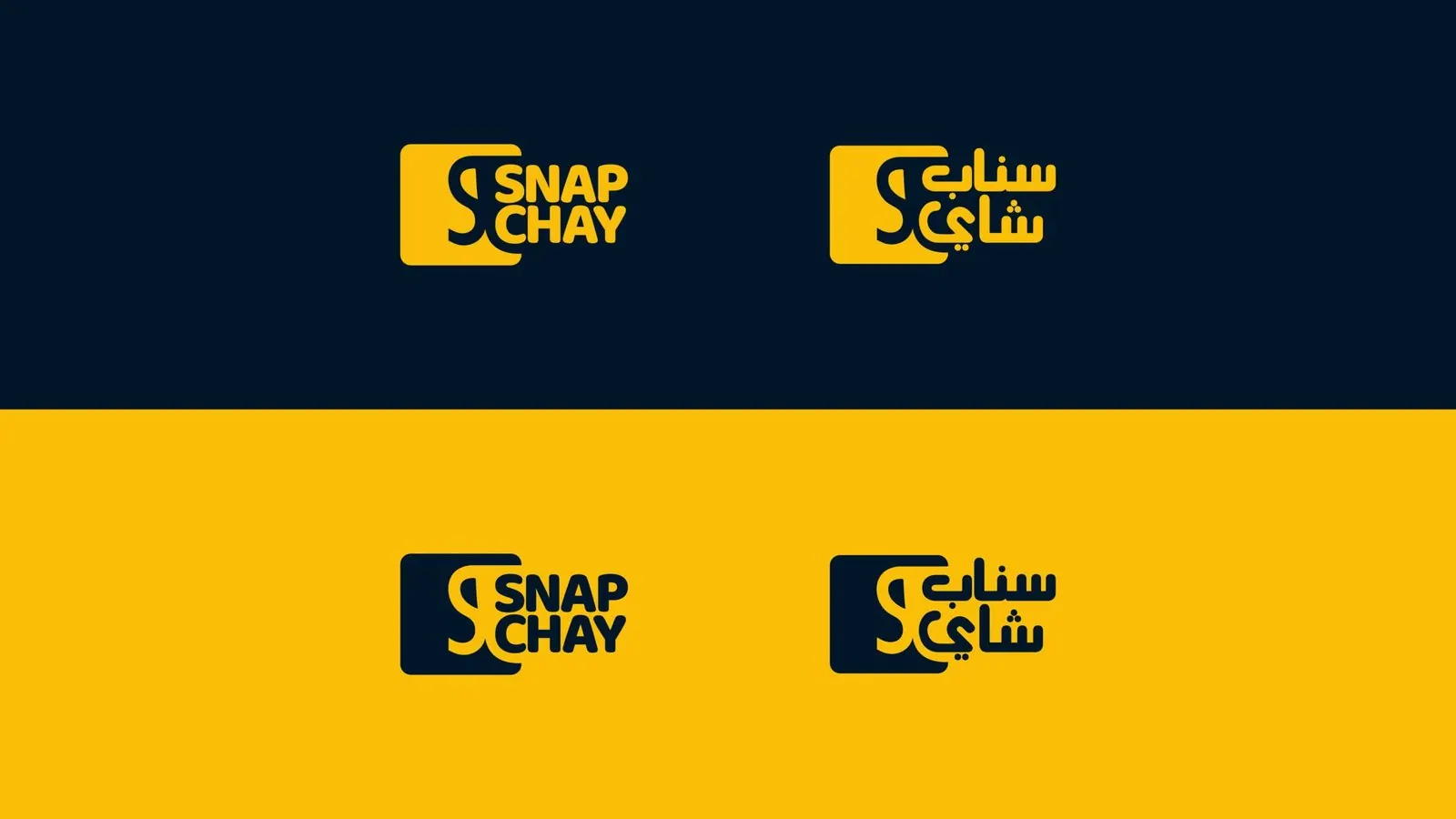
- Snap Chay: matching English and Arabic lockups, a colour system and a pattern for a cafeteria.
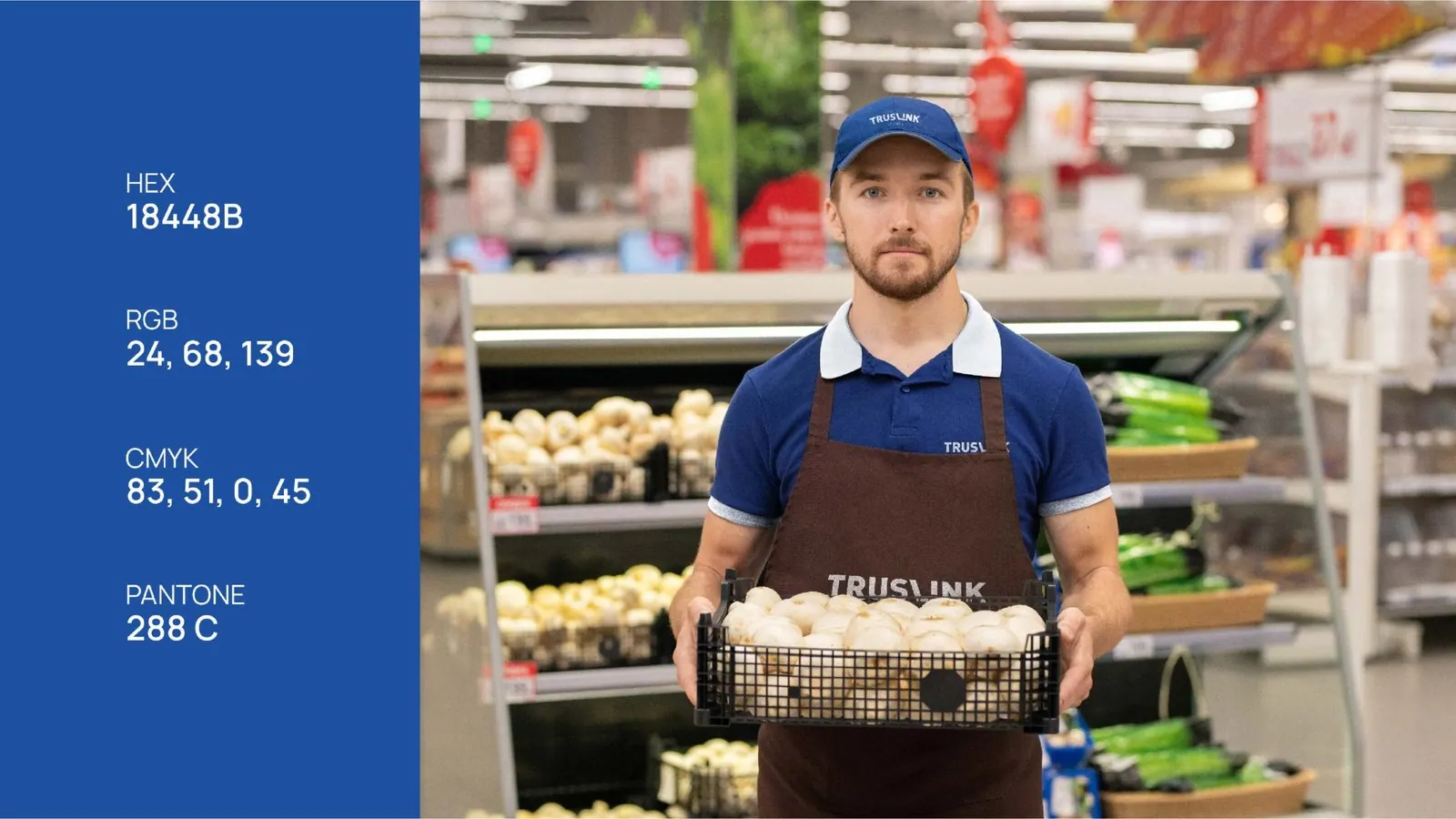
- Truslink Stores: a retail identity with a full colour specification, from the fascia to staff uniforms.
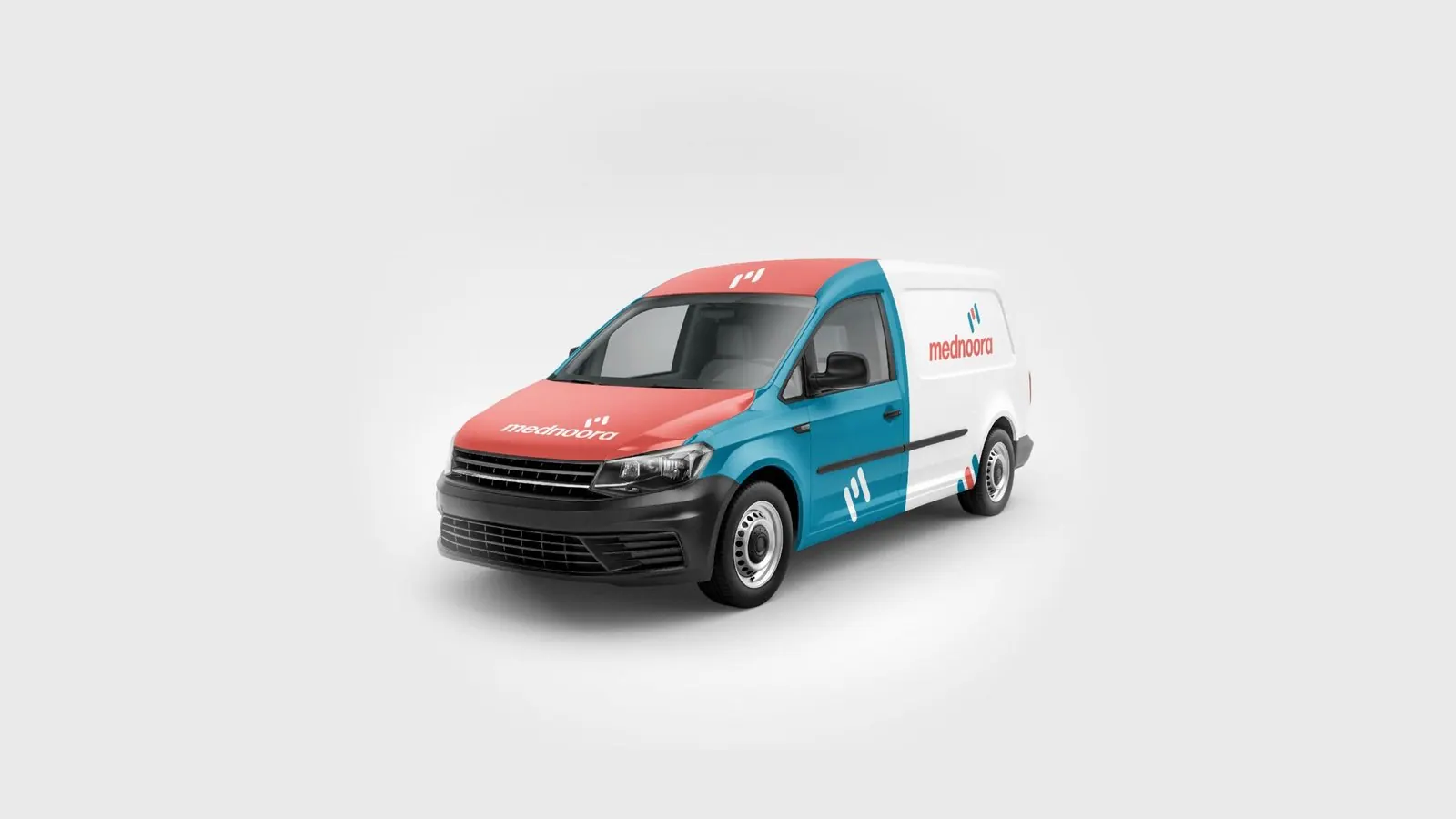
- Mednoora: a healthcare identity carried from the building sign to stationery and a delivery van.
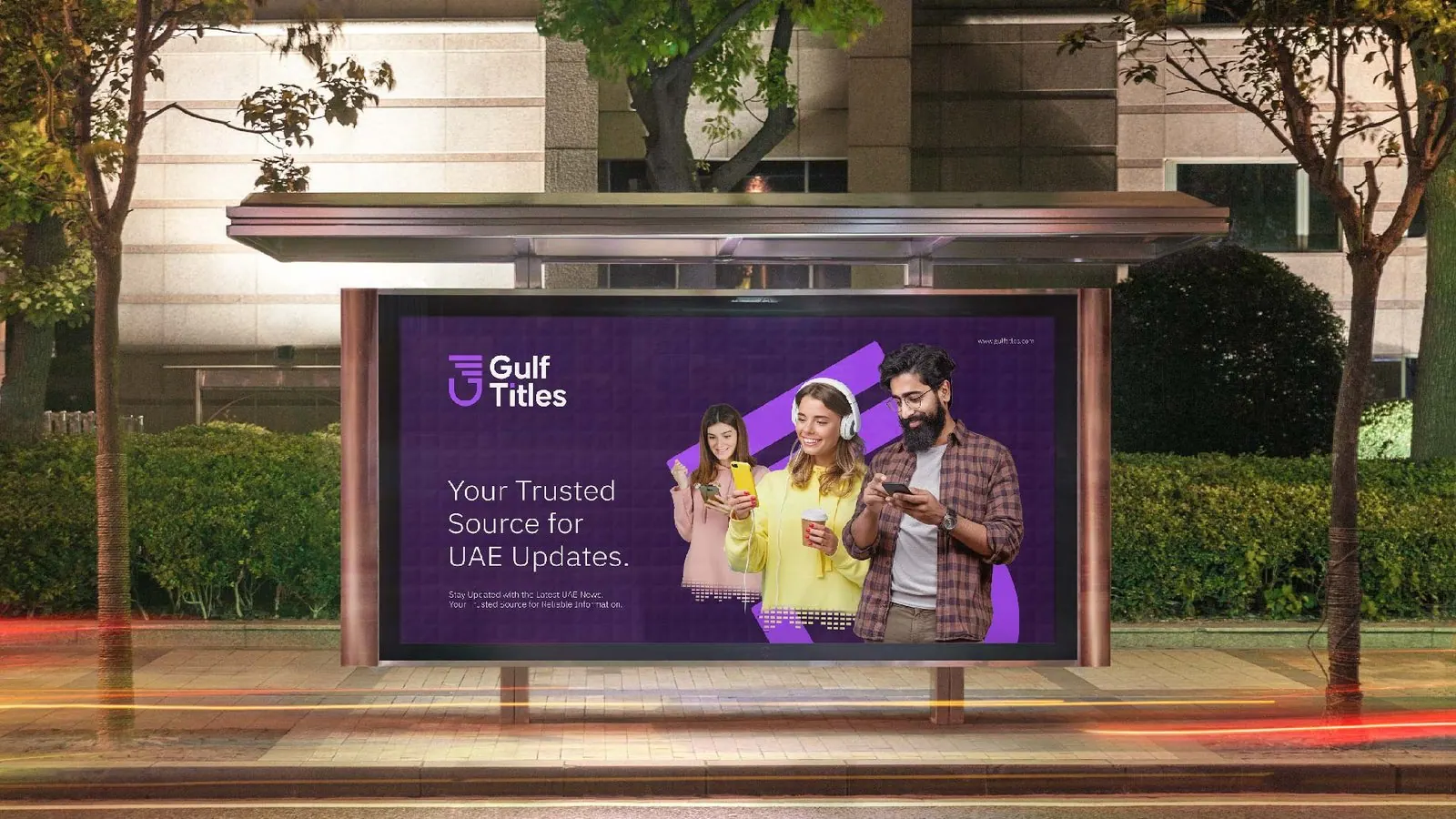
- Gulf Titles: a media brand for a channel sharing UAE updates, on outdoor ads, staff ID and merchandise.
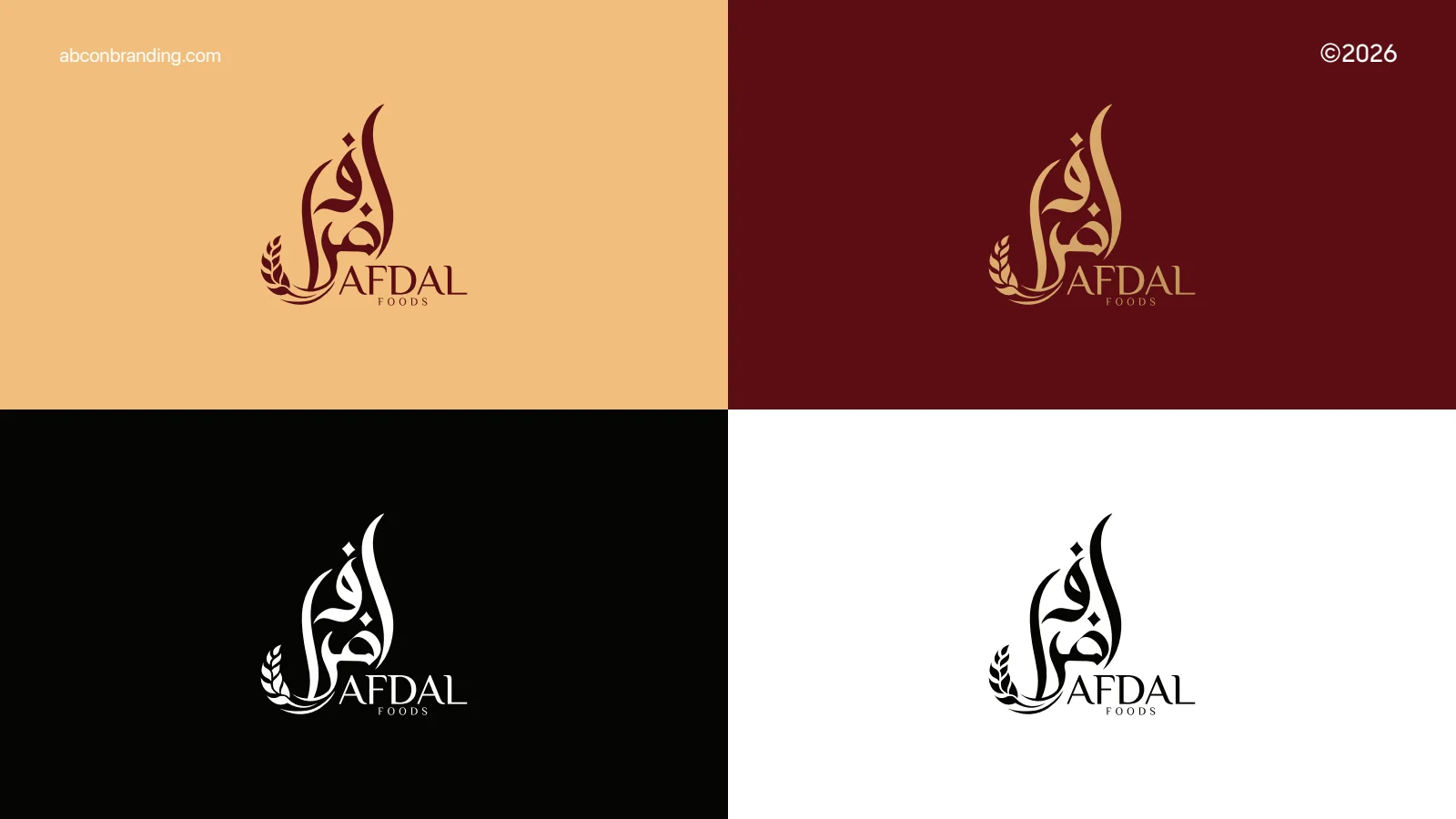
- Afdal Foods: an Arabic-led bilingual mark for a rice brand, kept intact in gold, burgundy, black and white.
Decisions behind the work
See how an idea carries into the design. These examples draw on the original project presentations.
How can two scripts belong to one identity?
Snap Chay’s original board places English and Arabic lockups on navy and yellow backgrounds.
The square symbol and shared palette connect both scripts. The original application boards show how that structure continues into cups and food boxes.
Read the Snap Chay case study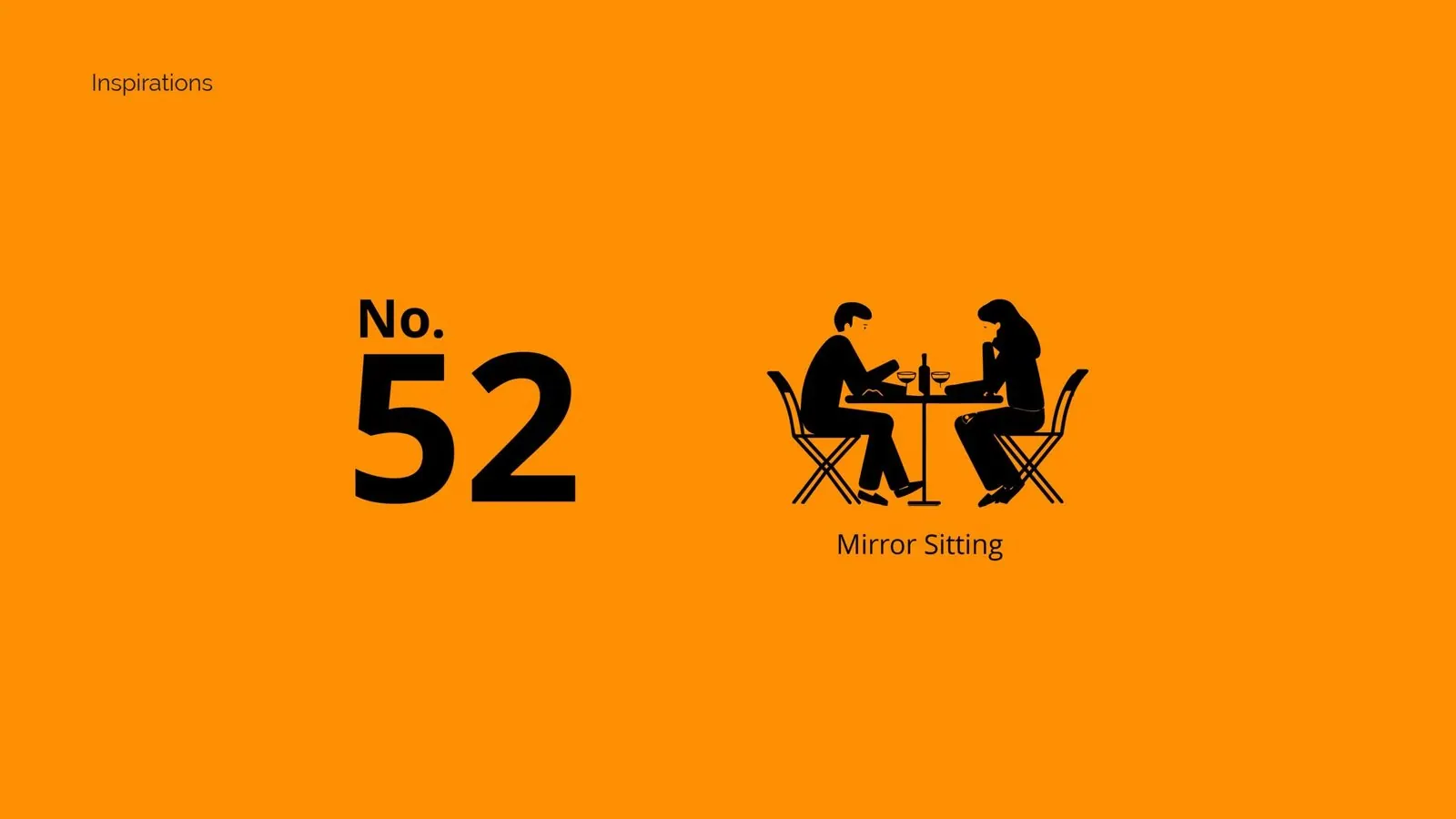
What idea gives the mark its structure?
The 52 Cafe inspiration board pairs the number with an illustration of two people seated face to face, labelled “Mirror Sitting”.
The 5 and 2 mirror each other in the monogram. The palette and application boards then carry that identifying form into cups, boxes and a paper bag.
Read the 52 Cafe case studyWhat shapes the cost of a brand identity
We quote every project after a first conversation, so the proposal matches what the business needs. These are the things that move the cost and the timeline most:
- Scope: a logo with basic guidelines is a smaller job than a complete system with every application designed.
- Naming: a new name adds creative rounds and checks on trademarks and domains.
- Languages: an Arabic identity designed alongside the English takes more design time than one language.
- Applications: each sign, pack, uniform and template adds design and approval time.
Our guide to what branding costs in Dubai explains how to compare quotes.
Questions and answers
Do you only design logos?
We don’t treat a logo as an isolated task. We first agree what the brand needs to say, then design the logo as part of a system that works across everything the business uses. If you only want a logo without that thinking, we are probably not the right fit.
Can you design our logo in Arabic and English?
Yes. We design the Arabic and English versions together so they share proportion, weight and character, as we did for Snap Chay.
What do we receive at the end?
The logo in print and screen formats, the colour values and typefaces, the brand guidelines and the finished application files, so your team and suppliers can use the brand without coming back to us for every file.
Can you refresh our current logo instead of replacing it?
Yes. If people already recognise the current logo, a careful refresh can keep that recognition while fixing what is not working. Our rebranding page explains how we decide.
What helps you scope an identity project?
Share your current logo and guidelines if you have them, the business or product name, the languages it needs to work in and a list of applications. A shopfront, a small cup lid and a website each place different demands on the mark. Tell us whether naming is already settled and which application needs to be ready first.
Preparing the first conversation? Build a brand project brief around your business challenge, audience and priorities.